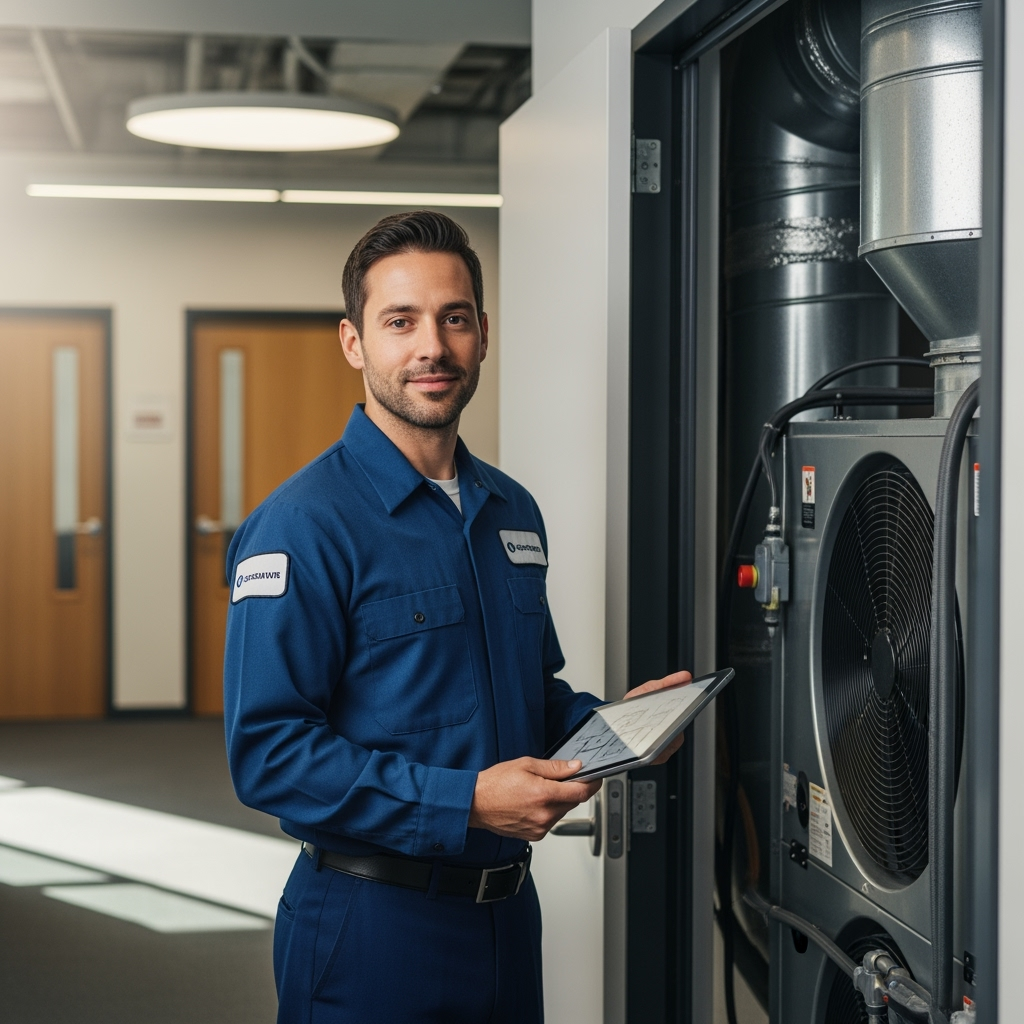
Finding reliable service for your building’s heating, ventilation, and air conditioning system can feel overwhelming, especially in a climate like Las Vegas. I’ve put together this hands-on guide to help you evaluate commercial hvac companies in Las Vegas and make choices that save money, reduce downtime, and improve indoor comfort. For background on energy use and efficiency opportunities that affect commercial HVAC decisions, the U.S. Department of Energy is a useful resource for national and regional trends: Energy.gov.
Why the right HVAC contractor matters in Las Vegas
Las Vegas presents unique challenges for commercial HVAC: extreme daytime temperatures, large buildings with high occupant density, and spaces that require strict temperature and humidity control like casinos, restaurants, data centers, and cold storage. When a rooftop unit fails on a hot summer afternoon, the consequences include lost productivity, damaged inventory, unhappy customers, and high emergency repair bills. Choosing the right contractor minimizes those risks by delivering fast emergency response, competent retrofits, and proactive maintenance tailored to our desert climate.
What top commercial HVAC companies in Las Vegas deliver
The best contractors in the area typically offer a mix of services beyond basic repair work. If you’re comparing bids, look for firms that can demonstrate experience across the following areas so your facility runs efficiently year-round.
Comprehensive services you should expect
- Commercial system installation for rooftop units, chillers, boilers, and packaged systems tailored to building load.
- Preventive maintenance programs that include seasonal tune-ups, filter management, coil cleaning, and control checks to extend equipment life.
- Commercial refrigeration services for kitchens, grocery stores, and cold storage, including leak detection and refrigerant management.
- HVAC controls, building automation, and energy management to reduce utility costs and improve occupant comfort.
Companies that provide in-house engineering, commissioning, and retrofit services add more value because they can optimize systems rather than simply replacing parts. A vendor who can work with your electrician or controls contractor is also a plus when projects touch multiple trades.
Local trends shaping commercial HVAC in the city
Two major trends are reshaping decisions for facility managers in Las Vegas. First, energy efficiency and electrification are accelerating as businesses respond to rising energy costs and local sustainability goals. Second, indoor air quality and smarter controls have become non-negotiable after recent years highlighted the importance of ventilation and filtration for occupant health.
These trends mean you should prioritize contractors who are familiar with high-efficiency replacements, variable-speed equipment, heat pump options, demand-controlled ventilation, and energy-recovery ventilation. Contractors that can provide energy modeling or simple ROI projections for upgrades will help you make budget-friendly, future-proof decisions.
How to vet commercial HVAC contractors—a quick checklist
I recommend using a repeatable vetting process so you can compare providers fairly. The short checklist below helps you sort through proposals and focus on reliability, expertise, and value rather than just price.
- Verify licensing and insurance and confirm that technicians are EPA-certified for refrigerant handling.
- Ask for local references from similar properties such as hotels, restaurants, offices, or retail centers, and request recent project examples.
- Request a written preventive maintenance plan with response-time guarantees and included tasks so you can compare apples to apples.
- Look for documented warranties and clear terms for replacement parts versus labor coverage.
Common HVAC problems in Las Vegas buildings and practical fixes
Because of the desert climate and building types common to the area, certain issues keep coming up. Knowing these in advance will help you ask informed questions during estimates and reduce surprise repair costs.
Typical problems I see are
- Overworked rooftop units leading to compressor failures — often solved by right-sizing equipment and switching to variable-speed compressors.
- Refrigerant leaks in commercial refrigeration lines — require certified leak detection, proper recovery, and sealed repairs to avoid repeated losses.
- Poor ventilation and uneven cooling in large open spaces — corrected with better zoning, variable air volume boxes, and improved controls.
- Clogged coils and filters due to dust and desert air — prevented with scheduled coil cleaning, filter programs, and protective louvers where needed.
Cost factors and how to lower long-term operating expenses
Initial installation cost is only one part of the story. Energy use, maintenance frequency, downtime, and the lifetime of equipment drive true lifecycle cost. When evaluating bids, ask vendors to provide estimated annual energy use or energy savings versus your existing system, and request examples of projects where the upgrade paid for itself through reduced utility bills.
Some concrete ways to save money over time include retrofitting controls for better scheduling, adding demand-controlled ventilation in spaces with variable occupancy, upgrading to higher-efficiency compressors and motors, and implementing predictive maintenance using basic sensor data. Even small improvements to duct sealing and insulation make a noticeable difference in cooling loads in our hot summers.
Emergency response and preventive maintenance plans that work
Downtime is expensive. A strong maintenance partner combines scheduled inspections with guaranteed emergency response times and clear escalation protocols. When reviewing maintenance agreements, look for these features to protect your building.
- Defined response windows for emergency calls and priority dispatch options for critical systems.
- Seasonal inspections with written reports, photos of issues, and recommended priorities for repair or replacement.
- Parts availability and proactive stocking plans for frequently used components, which reduce repair lead times.
- Optional remote monitoring or automated alerts for temperature, pressure, or compressor cycles to catch faults early.
Combining routine maintenance with documented emergency procedures gives you predictable costs and faster recovery from equipment failures.
Questions to ask before signing a contract
As you narrow your list of potential vendors, ask detailed questions that reveal their experience and accountability. Here are the questions I always ask, and I recommend you add them to your checklist:
– How many commercial projects have you completed in Las Vegas or nearby neighborhoods like The Strip, Downtown, Summerlin, Paradise, or Henderson? Request names and contactable references that match my building type.
– Are your technicians licensed, trained, and updated on refrigerant regulations and energy code changes?
– Can you provide a written preventive maintenance plan and a sample invoice so I can see what’s included?
– What are your guaranteed response times for emergency repair calls, and do you offer after-hours service?
– Do you offer energy audits, controls upgrades, or HVAC retro-commissioning to improve efficiency and occupant comfort?
Choosing the right contract type for your property
There are a few contract models you’ll commonly see. Which one you choose should match your risk tolerance, budget, and the criticality of your systems.
Fixed-price annual maintenance is simple and predictable, covering routine inspections and minor adjustments. A cost-plus or time-and-materials contract can work if you want flexibility and plan to manage parts inventory yourself. For high-risk facilities, look for comprehensive HVAC service agreements that bundle preventive maintenance, emergency response, and a set number of repairs into a single annual fee. Make sure the scope and exclusions are spelled out clearly so there are no surprises.
Small upgrades that make a big impact
Not every project needs a full system replacement to deliver benefits. I often recommend starting with targeted upgrades that provide quick wins and build a track record before moving to larger investments. Examples include:
- Installing variable-speed drives on existing motors to reduce peak power draw and improve part-load efficiency.
- Adding smart thermostats and programmable controls that manage schedules and reduce unnecessary runtime.
- Upgrading to higher-efficiency filters and establishing a disciplined filter-change program to protect coils and compressors.
- Sealing and insulating ductwork in unconditioned spaces to prevent thermal losses.
These measures can cut energy use and extend equipment life, often paying for themselves quickly in reduced energy bills and fewer breakdowns.
Final tips for facility managers in Las Vegas
Work with a contractor who understands local building codes, seasonal load patterns, and how to protect systems from desert conditions. Prioritize vendors that offer transparent pricing, documented maintenance tasks, clear emergency response times, and a plan for energy-efficiency improvements. Don’t be afraid to request a performance guarantee or a simple baseline energy measurement so you can track results after upgrades.
When you combine careful vetting with regular maintenance and smart, phased investments, your commercial HVAC systems will be more reliable, cost-effective, and ready to handle Las Vegas summers for years to come.
If you’re ready to get an experienced team out to your property in Las Vegas, consider contacting Nextech for a consultation and custom proposal that fits your facility’s needs and budget.